Heat Pump Myths Busted: What North Yorkshire Homeowners Actually Need to Know in 2026
Confused by negative headlines and online comments? Let’s clear up the biggest heat pump myths once and for all.
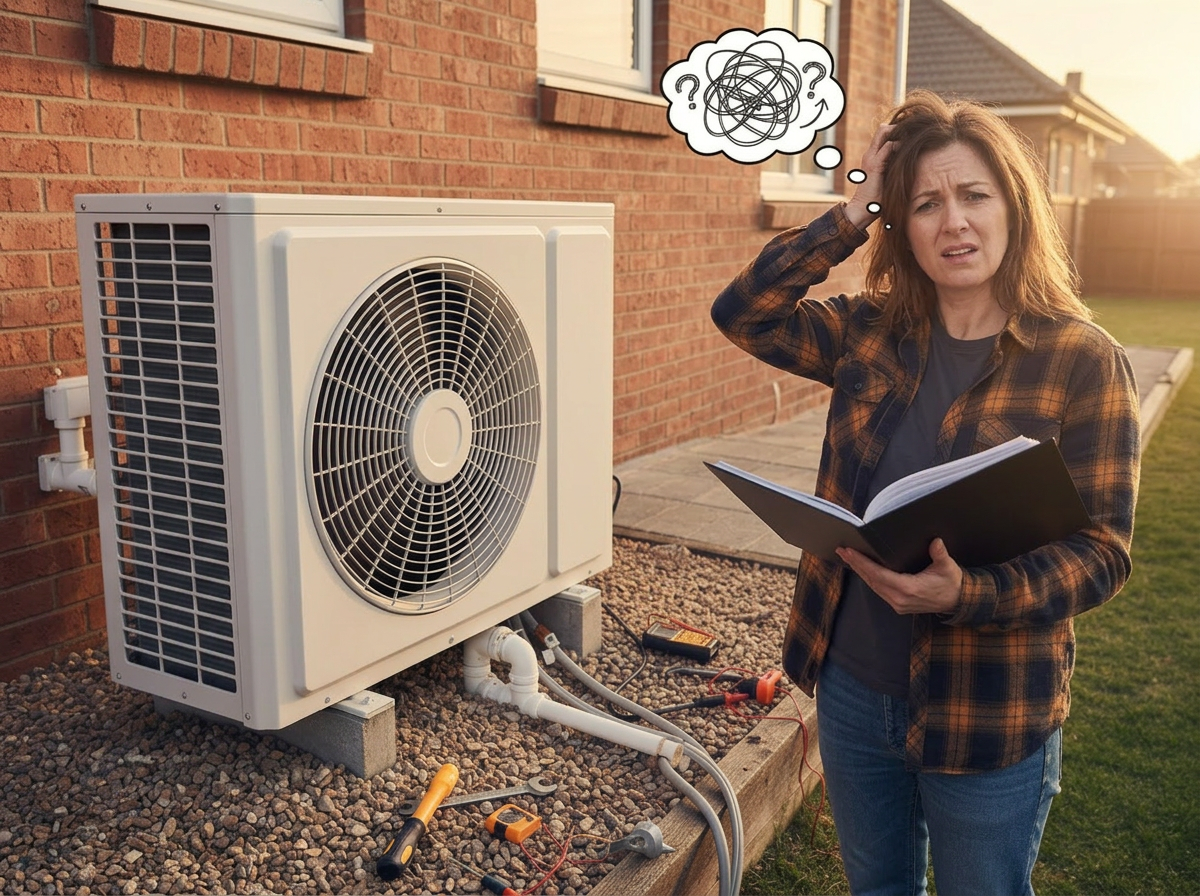
If you've been looking into air source heat pumps, you've probably come across some fairly strong opinions. Social media threads, newspaper comment sections and the occasional headline can paint a confusing picture — and not always an accurate one.
The reality is that most of the criticism directed at heat pumps stems from early teething problems in the industry, poorly designed installations, or misconceptions that have simply been repeated often enough to stick. Let's work through the most common ones.
Myth 1: “Heat Pumps Don't Work When It's Cold”
This is probably the most widespread myth — and the most straightforwardly wrong.
Modern air source heat pumps are engineered to perform efficiently well below freezing. Norway, Sweden and Finland have been running heat pumps as their primary heating source for decades, through winters that make a North Yorkshire January look mild.
✔ Heat pumps extract heat from outside air even at sub-zero temperatures
✔ UK winters are relatively moderate compared to high heat pump adoption countries
✔ Output dips slightly in extreme cold — but the system keeps working
The reality: A properly sized and installed heat pump handles UK winters, including the North Yorkshire hills, without difficulty.
Myth 2: “They're Too Expensive to Run”
Electricity costs more per unit than gas — that's true. But heat pumps don't consume energy the way a boiler does.
A heat pump typically produces 3 to 4 units of heat for every 1 unit of electricity it uses — a ratio known as the Coefficient of Performance (COP). That changes the maths considerably.
In practice that means:
- Lower overall energy consumption than direct electric heating
- More predictable running costs than an ageing oil or LPG boiler
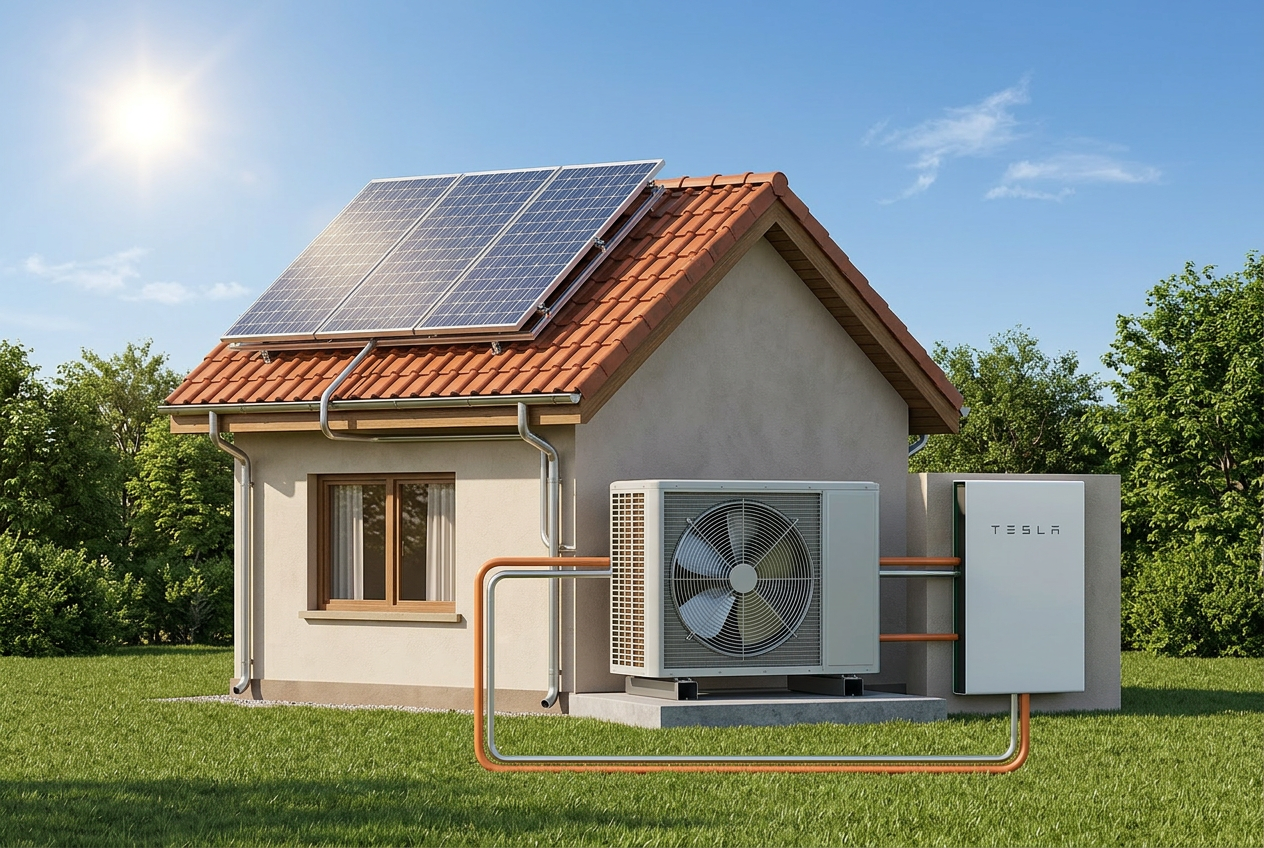
- Significantly better economics when combined with solar panels and battery storage
The reality: Running costs are comparable to a gas boiler in a well-insulated home — and often considerably lower than oil or LPG, which is relevant for much of rural North Yorkshire.
Myth 3: “You Need a Huge Garden or Major Renovation”
A common worry — and largely unfounded.
In practice:
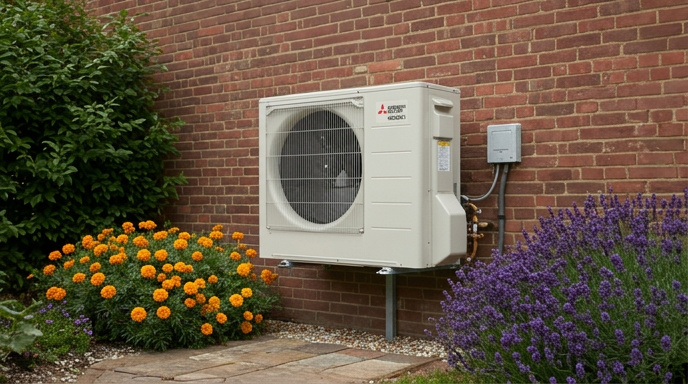
- The outdoor unit is roughly the size of a large air conditioning unit
- Inside, the existing boiler is replaced with a compact unit, typically alongside a hot water cylinder suited to heat pump flow temperatures
- Most homes need no significant structural work
The reality: The majority of North Yorkshire properties — including older stone-built homes — can accommodate a heat pump installation with minimal disruption when it's designed properly from the outset.
Myth 4: “You Won't Get Proper Heating or Hot Water”
This one usually traces back to early or poorly specified installations from years ago.
A modern, professionally designed system will:
- Heat your home evenly and consistently throughout
- Deliver reliable hot water for everyday household use
- Run more steadily than the on/off cycling of a conventional boiler
Heat pumps work at lower flow temperatures than boilers, which means the heat feels different — gentler and more constant. Different isn't worse.
The reality: You get the same comfort. It's just delivered more efficiently.
Myth 5: “It's Better to Hold Off Until the Technology Gets Better”
Heat pump technology is mature and proven. Improvements are incremental rather than revolutionary — there's no significantly better version around the corner that justifies waiting.
In the meantime, holding off could mean:
- Missing out on the £7,500 Boiler Upgrade Scheme grant — or the £9,000 available to oil and LPG households from July 2026
- Losing access to 0% VAT on heat pump installations, currently extended to 2027
- Continuing to pay higher energy bills on an ageing fossil fuel system
The reality: The technology is ready now. The financial incentives may not remain this generous indefinitely.
Myth 6: “Older Homes Aren't Suitable”
North Yorkshire has a significant stock of older properties — stone farmhouses, Victorian terraces, period homes in market towns — and this myth puts a lot of people off unnecessarily.
Older homes can run heat pumps very successfully with:
- Accurate heat loss calculations carried out during the survey
- Radiator upgrades where required
- Careful system design from an experienced installer
The reality: The age of your home matters far less than the quality of the design and installation.
So Why Do Heat Pumps Get Such a Bad Press?
Most of the negative stories come from a handful of recurring causes:
- Poorly installed or incorrectly sized systems
- Homeowners not being properly briefed on how the technology works
- Headlines written for clicks rather than accuracy
A heat pump isn't a straightforward boiler swap. When it's designed and installed properly, it's one of the most efficient domestic heating systems available — and one of the few with government grant support behind it.
The Bottom Line
Heat pumps are:
✔ Efficient and reliable
✔ Well suited to UK homes, including older North Yorkshire properties
✔ Backed by government grants worth up to £9,000
✔ A proven long-term investment
Don't let outdated information or online noise put you off a decision that could genuinely benefit your home for the next 20 years.
Thinking About a Heat Pump in North Yorkshire?
The best first step is finding out whether your property is suitable and what funding you're entitled to. Get in touch with Fell Heat Pumps today — we'll answer your questions honestly and without any pressure to commit.
You might also like
Expert Tips